

Affluent British Citizens Hurry to Beat Possible Capital Gains Tax Hike
The anticipation of a rise in capital gains tax has become the top concern for affluent Britons, prompting many to act swiftly to avoid potential impacts before the budget announcement on 28 October.
According to various wealth advisors quoted by Bloomberg, investors are keen to capitalize on the existing 24% rate of capital gains tax (CGT) before Chancellor of the Exchequer John Healey unveils any new fiscal measures aimed at increasing government revenue. CGT applies to the profits individuals make from selling assets.
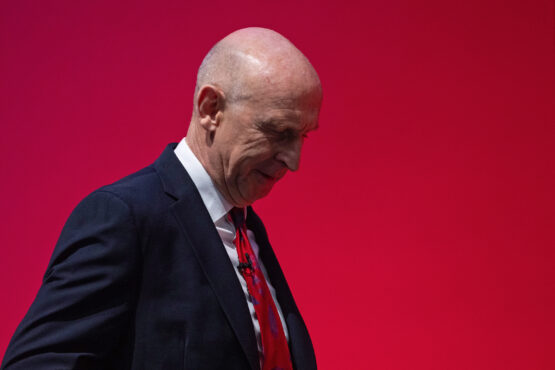
Chancellor of the Exchequer John Healey Image: Chris Ratcliffe/Bloomberg
Chris Etherington, a private client tax partner at RSM UK, noted, “Many individuals are rushing to finalize transactions to lock in the current capital gains tax rate. We are observing a trend of people trying to expedite deals before the budget is announced.”
Later this month, Healey will provide immediate support to address the cost-of-living crisis while also aiming to restore public finances affected by spending pressures and the ramifications of the US-Iran war. While discussions of a potential CGT hike are ongoing, linking it to income tax rates is deemed unlikely by insiders.
Iain Tait, head of the private investment office at wealth management firm W1M, stated, “Concerns regarding capital gains tax are the primary issue. Many of our clients are inquiring about strategies to realize gains at the current 24% rate.”
A spokesperson from the Treasury opted not to provide comments, adhering to the usual policy before budget announcements: “Tax decisions are for the chancellor to disclose during fiscal events, rather than engaging in commentary on speculation or rumors.”
Read: A new era of tax residency: Why the old approach no longer works
Healey is considering capital gains taxes amid an outflow of wealth, as approximately $160 billion from individuals on the Bloomberg Billionaires Index has already exited the UK in the past two years.
ADVERTISEMENT
CONTINUE READING BELOW
While many of those departing originate from abroad, the recent move of British hedge fund founder Chris Rokos to Greece highlights growing discontent among local entrepreneurs.
A survey conducted among 500 UK business owners in August by London-based professional services group S&W found that nearly half of the respondents would contemplate relocating if an increase in capital gains taxes is implemented in the Autumn budget.
Ollie Saiman, co-founder of wealth manager Six Degrees, remarked, “We wouldn’t be surprised if the top CGT rate rises to 26% or even 28%.”
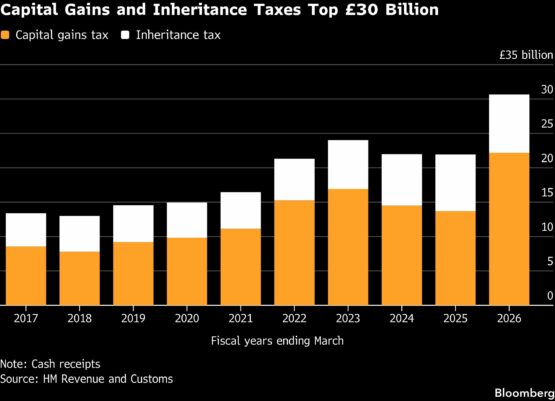
Rachel Reeves, Healey’s predecessor, raised capital gains tax for individuals earning above £50,271 ($66,600) from 20% to 24% in her first budget in 2024, and for lower earners from 10% to 18%.
This adjustment resulted in a significant short-term revenue increase for the Treasury, with combined revenues from CGT and inheritance tax surpassing £30 billion in 2025-26 – a nearly 40% rise compared to the previous fiscal year – as Britons divested assets in anticipation of the increase.
An investor wary of another capital gains tax rise is Konstantin Sidorov, whose London-based fund has achieved over a 500% gain from its investment in Revolut Ltd, the UK fintech company founded by billionaire Nik Storonsky.
Sidorov described a dedicated wealth tax as a “red line” that would prompt him to consider relocation after more than ten years in the UK.
ADVERTISEMENT:
CONTINUE READING BELOW
Expressing his sentiments, the 59-year-old said, “My feeling is quite negative – the question is: How much worse?” He added that if capital gains taxes were to increase, “we’d likely see far fewer investors willing to take risks.”
Read: Tax change could hit South Africans with spouses living abroad
Capital gains taxes were first imposed by Harold Wilson’s Labour government in the 1960s to curb tax avoidance strategies that targeted higher income tax rates.
Three decades later, Chancellor Gordon Brown introduced a tapered relief system for capital gains, incentivizing long-term investments, which was discarded by his successor, Alistair Darling, in 2008.
John Caudwell, founder of Phones 4u, who benefited from this system when he sold the retailer for roughly $1.6 billion two decades ago, advocates for its reimplementation as a means to foster young entrepreneurs in Britain.
Caudwell, 74, who intends to allocate at least 70% of his wealth to charitable causes, commented, “Let’s encourage them to hold onto their businesses for 20 or 30 years by adjusting the tax rate and motivating inward investment.”

John Caudwell Image: Betty Laura Zapata/Bloomberg
“As a young entrepreneur, you nurture your business, persist through challenges, and create jobs, knowing that favorable tax rates await you. This assurance incentivizes long-term commitment rather than exiting the market after a decade.”
The competition to succeed Keir Starmer as UK prime minister during the summer heightened worries about further increases in capital gains taxes, following commitments from his successor, Andy Burnham, to honor Labour’s manifesto pledge against raising income tax, national insurance, or VAT – leaving CGT vulnerable to increase.
ADVERTISEMENT:
CONTINUE READING BELOW
Burnham has since indicated a desire to avoid repeating the extensive tax hikes implemented during his predecessor’s term, yet the potential for capital gains increases remains as Healey grapples with a challenging financial landscape.
Read: Tax on investments: What investors need to know in 2026
Given Healey’s declared commitment to fiscal discipline, he faces a £35 billion challenge to meet the Labour government’s spending goals, as advised by the Institute for Fiscal Studies.
The UK’s debt-to-GDP ratio has remained relatively stable since the pandemic, and the government is cautious about increasing debt levels amidst high interest rates.
An expected rise in wage growth, as predicted by the government’s fiscal watchdog, the Office for Budget Responsibility, could also mitigate the need for additional tax increases and borrowing, as per a Bloomberg Economics report published on Wednesday.
Ben Yearsley, investment director at Fairview Investing Ltd, remarked regarding the likelihood of steep CGT hikes, “I don’t think people like Healey are unwise. However, many backbenchers seem to hold a simplistic ‘tax the rich’ approach without considering the broader implications.”
© 2026 Bloomberg